Septic system installation in Cookeville and the Upper Cumberland
A new house outside city sewer needs a septic system, and so does an older home whose drain field has failed. We install tanks and drain fields on residential lots across Putnam County and the Upper Cumberland, with the trenching, the setting and the backfill done by our own crew.
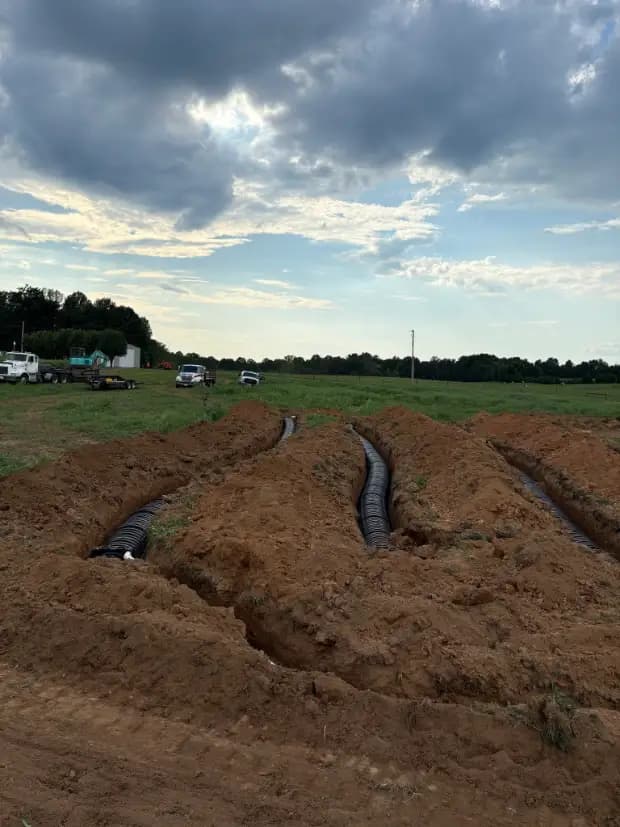
What a septic installation involves
In Tennessee a septic system cannot go in without a permit from the state environmental office and a soil evaluation of the lot. The soil work decides what kind of system the ground will support and how large the drain field has to be. Conventional gravity systems work where the soil drains well. Where it does not, the permit will call for an alternative design.
Once the permit is issued the crew stakes the tank and the field lines to the approved layout, trenches the lines, sets the tank, runs the pipe from the house, lays the drain field and backfills. The state inspects the system before it is covered. After the inspection passes the crew finishes backfilling and rough grades the disturbed ground so it drains away from the tank lid and the house.
How Morgan's installs a septic system
Licensed and insured. The crew doing the trenching and setting the tank is our own W2 crew, and the supervisor on the job is the person who bid it.
Septic work usually lands in the middle of a bigger project. On a new build we can clear and grade the lot, put in the septic system, and then pour the footings, slab and driveway, so one company is responsible for how all of it fits together and drains. Joe lays that sequence out on the site walk and puts it in writing.
Questions homeowners ask
Do I need a permit for a septic system in Putnam County?
Yes. Tennessee requires a permit and a soil evaluation before a subsurface sewage system is installed, and the system is inspected before it is covered. Joe goes over the permit steps with you when he looks at the lot.
Can you replace a failed drain field?
Replacing a failed field is the same permitted process as a new one. The soil evaluation determines where the new lines can go, since the old area is usually saturated. Joe looks at the site and the existing system before quoting it.
How long does a septic installation take?
The permit and soil evaluation are the long part and are outside our control. Once the permit is in hand, Joe gives you the schedule for the work on site, and rain that saturates the ground stops trench work until it dries.
Will the yard be torn up?
Trenching for the tank and field lines disturbs a large area of the yard, and there is no way around that. The crew backfills and rough grades the disturbed ground when the inspection is done. Whether seeding and finish landscaping are part of the job is stated in the written estimate.