Concrete driveways in Cookeville and the Upper Cumberland
A driveway is the first thing anyone sees at your house and the slab that takes the most abuse. We form it to your lot, build the base properly and pour it thick enough for the vehicles you actually own.
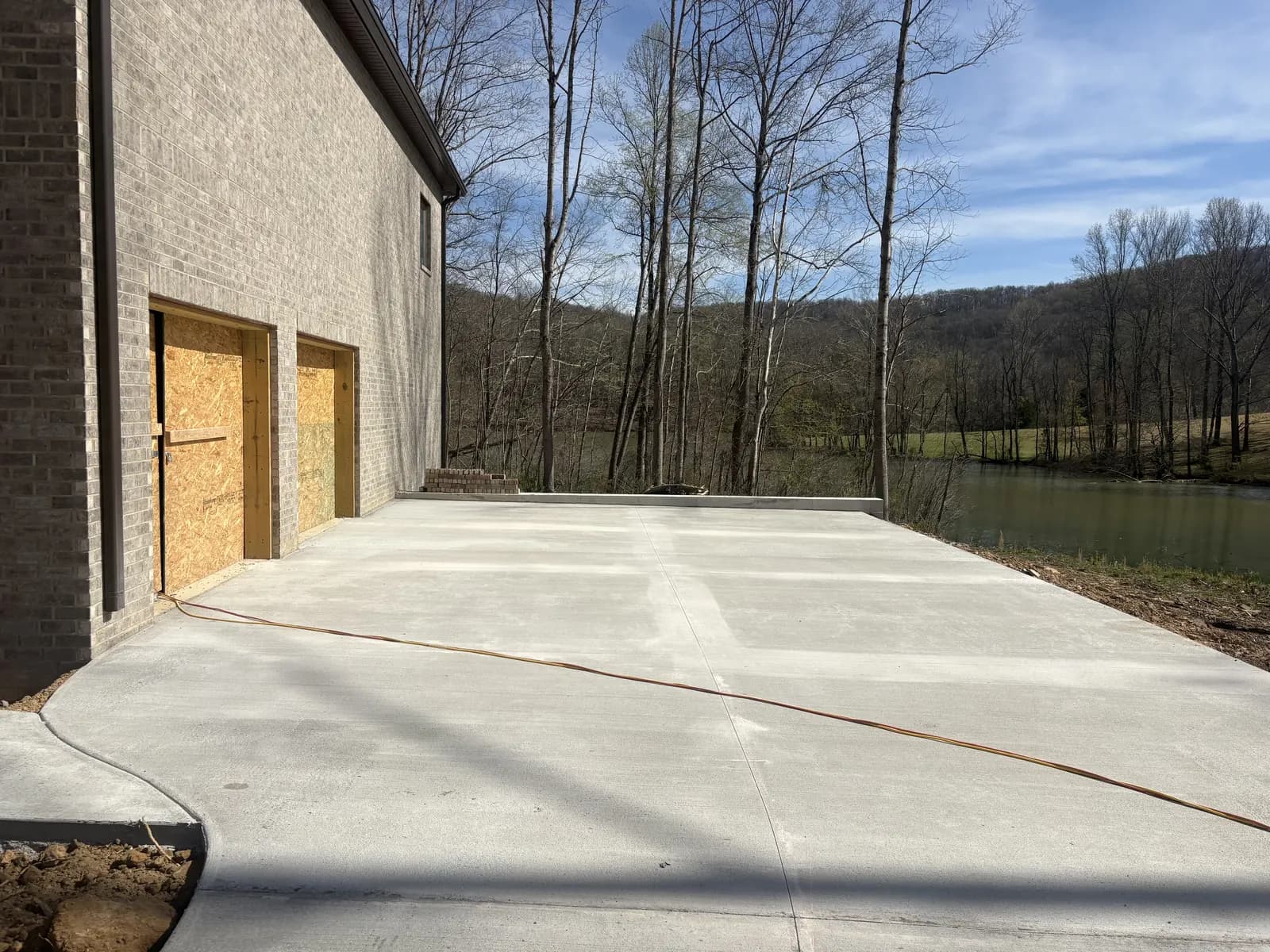
How much does a concrete driveway cost in Cookeville?
Driveway pricing follows square footage, thickness, finish and whether an old slab has to come out first. Two drives the same size can price very differently once grade, drainage and truck access are measured, so Joe walks every site himself and puts a firm number in writing, free of charge.
What a driveway job involves
Joe walks the site first. He checks how water moves across the lot, where the drive meets the road and the garage, and whether the existing base can be reused or has to come out. That visit produces the written estimate.
On pour day the crew cuts the grade, compacts the base, sets forms to the line and slope agreed on the walk, places reinforcement, and pours. Control joints are cut so the slab cracks where we decide, not where it wants to. The finish goes on while the concrete is workable, and the crew cleans up before leaving.
How long a driveway takes depends on its size, whether there is a tear-out first and the weather. Joe gives you the schedule with the written estimate, and the crew confirms the pour date once the forecast is clear.
Finish choices
Broom finish
The standard for driveways. Light texture for traction in rain and ice, easy to clean, and the finish most homeowners choose.
Exposed aggregate
The top paste is washed back to show the stone. More texture and a look that hides tire marks well.
Stamped or colored
Pattern and integral color for a drive that matches the house. Usually paired with a broom-finish apron for the street connection.
Extensions and turnarounds
Widening a narrow drive, adding a parking pad or a turnaround, matched to the existing slab where possible.
How Morgan's pours a driveway
Our own W2 crews do the work. There is no subcontracted labor on your property, and the person who bid the job supervises it on site.
Licensed and insured Grade and base preparation are done by us, not left to a separate contractor, so the slab sits on ground that was compacted for it.
We size thickness and reinforcement to what will park on the drive. A slab that carries a truck and a trailer is not the same slab as one that carries a sedan, and we say which one you are getting in writing.
What affects the price
- Square footage, which is most of the number.
- Whether an old driveway has to be broken out and hauled off first.
- Grade work and base material the lot needs before the pour.
- Thickness and reinforcement for the vehicles you park.
- Finish, with stamped and colored costing more than broom.
- Access for the concrete truck and how far the crew has to move material by hand.
Joe goes over each of these on the site walk and puts the firm number in writing.
Questions homeowners ask
How thick should a residential driveway be?
Most residential driveways are poured at four inches with reinforcement. Drives that carry heavy trucks, trailers or equipment are poured thicker. Joe confirms the thickness on the site walk and puts it in the written estimate.
How long before I can drive on new concrete?
Foot traffic comes first, passenger vehicles wait longer, and heavy vehicles wait longest. Weather changes cure times, so the crew tells you the dates for your slab before they leave.
Do you tear out the old driveway?
Yes. Demolition, haul-off and rebuilding the base are part of a replacement job. See the tear-out and replacement page for how that works.
Will the new driveway crack?
Concrete moves, so every slab is cut with control joints that give it a place to crack cleanly. Proper base compaction and reinforcement keep those cracks tight and out of sight.
Do you pour driveways in winter?
Concrete slows down in the coldest months around here. We pour when the forecast allows and schedule around it, and the crew confirms your pour date once the forecast is clear.
Related answers
Can you extend or widen an existing concrete driveway?
How a concrete driveway is widened or extended in Middle Tennessee: tying new concrete to old, matching the surface, parking pads, permits and what sets the price.
How thick should a residential driveway be?
Four inches with reinforcement is standard for cars. Go thicker for trailers and equipment, and build the base right. Thickness alone cannot save it.
How long before you can drive on new concrete?
Walk on new concrete after about a day, park a car after about a week, and expect full strength near 28 days. Weather changes every one of those numbers.