Concrete tear-out and replacement in Cookeville and the Upper Cumberland
Old concrete fails for reasons that are underneath it, and pouring over the same base gives you the same result. We break out the slab, haul it away, fix whatever let it move, and pour a new one that will not repeat the problem.
How much does a concrete driveway replacement cost in Cookeville?
Replacement adds demolition, haul-off and a rebuilt base to the price of the new slab. Sometimes only a few panels need to come out, which can save real money. Joe looks at the old slab, the base and the access on a free site walk and puts the options and the price in writing.
What a tear-out and replacement involves
Joe starts by looking at how the old slab failed. Wide cracks, panels that have sunk or heaved, and edges that have crumbled each point to a different cause, whether that is a base that was never compacted, water running under the slab, tree roots, or a slab poured too thin for the trucks on it. Knowing why it failed tells us what has to change in the rebuild, and that goes into the written estimate.
The crew breaks the old concrete with equipment sized to the job, loads it out and hauls it off. Rebar or mesh in the old slab comes out with it. With the slab gone, the crew corrects the grade, adds and compacts new stone, and deals with whatever drainage or root issue caused the failure. Then it is a new pour: forms set to the original footprint or a revised one, reinforcement placed, concrete poured and finished, joints cut.
Because the tear-out and the pour are done by the same crew, the demolition, the base work and the new slab run as one job, with the breakout adding time ahead of the pour. Wet ground slows the breakout and the base work, so the schedule follows the forecast, and Joe gives you the schedule with the written estimate.
Replacement choices
Full replacement
The whole drive, patio or walk comes out and is replaced with new concrete on a rebuilt base. This is the right call when the failure runs through most of the slab or the base is the problem.
Partial or section replacement
Cutting out the failed panels at the joints and replacing only those, matched to the surviving slab. It costs less when the damage is local and the rest of the slab is sound.
Replace and expand
Taking out an old slab and pouring a bigger or reshaped one, such as widening a drive, adding a turnaround or squaring off an odd patio.
Upgrade the finish
Since the slab is coming out anyway, this is the moment to change from broom to exposed aggregate or stamped, or to add a border. The demolition cost is the same either way.
How Morgan's replaces concrete
Demolition and the new pour are handled by the same W2 crew, so there is no gap where one contractor blames another. No day labor and no subcontracted crew works on your property, and the English-speaking supervisor on site is the person who looked at the old slab and bid the job.
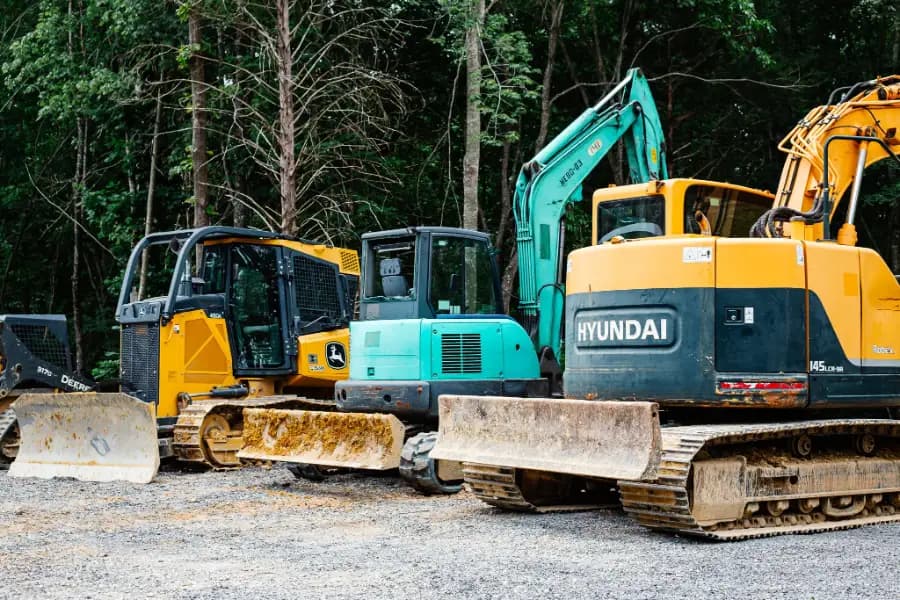
Licensed and insured We own the excavation equipment used to break out and load the old concrete, so the haul-off and the base rebuild are done by us and priced in one estimate rather than sourced from a separate hauler.
Josh runs the crew and makes sure the base under the new slab is compacted and draining, since that is where the last slab went wrong. The site is cleaned up and graded back when we leave, and the office returns every call and request.
What affects the price
- The square footage being removed and replaced.
- The thickness of the old slab and how much reinforcement is in it, which sets breakout time.
- Haul-off distance and how much debris the job produces.
- The base and drainage work needed to fix the reason the old slab failed.
- Access for equipment and trucks, particularly in a backyard or behind a fence.
- The finish on the new slab, with stamped and exposed aggregate above broom.
Joe goes over each of these on the site walk and puts the firm number in writing.
Questions homeowners ask
Can I just pour new concrete on top of the old slab?
Overlaying a failed slab carries the failure up into the new surface. Cracks in the old concrete reflect through, and sunk or heaved panels keep moving underneath. Tearing out and rebuilding the base is the fix that lasts, and it is what we recommend and what we quote.
Do you replace only the broken sections?
Yes, we do when it makes sense. If the damage is limited to a few panels and the base under the rest is sound, we saw-cut at the joints and replace those panels. If the slab is failing in several places, a full replacement is usually the better value, and Joe will say which he recommends on the site walk.
Where does the old concrete go?
The crew loads it out and hauls it off the property as part of the job. You are left with a cleared, graded site ready for the new pour.
Why did my old driveway crack and sink?
The common causes are a base that was never compacted, water washing fines out from under the slab, tree roots, or a slab poured too thin for the vehicles using it. Joe reads the failure pattern on the site walk and tells you which it was so the replacement addresses it.
How long is the driveway out of service?
The slab is unusable from the day breakout starts until the new concrete has cured enough to drive on. Joe gives you the schedule with the written estimate, and the crew tells you the date you can park on it.
Can the new slab be a different shape or size?
Yes. A replacement is the easiest time to widen a drive, add a parking pad, extend a patio or reroute a walk, because the site is already open. Tell Joe what you wish the old slab had been and he will price the new footprint.
Related answers
Resurface or replace: how to tell
Surface flaking and hairline cracks can sometimes be resurfaced. Heaving, settling and wide cracks mean the base failed, and a new surface fails with it.
Why is my concrete driveway cracking or sinking?
The common causes of a cracked or sinking concrete driveway in Middle Tennessee: base failure, drainage, heavy loads, missing joints and freeze and thaw. When to repair and when to replace.
What to expect on pour day
The sequence on pour day: crew arrival, forms and base check, the truck, the pour, finishing, joints, cleanup, and what you need to do beforehand.